

Introduction
Metabolic syndrome (MetSy) presents a significant public health challenge due to its association with serious cardiovascular and metabolic diseases and their related complications. MetSy is generally characterized by a cluster of clinical and biochemical conditions, which commonly coexist due to shared pathophysiological mechanisms. These conditions include central obesity, insulin resistance or glucose intolerance, dyslipidemia, and hypertension [1]. Despite advancements in understanding its pathophysiology, the precise mechanisms underlying MetSy remain unclear and continue to be debated. Recent research emphasizes the role of low-grade inflammation and its association with inflammatory markers such as C-reactive protein (CRP), interleukin-6 (IL-6), and tumor necrosis factor-α (TNF-α) [2, 3]. In particular, adipose tissue plays a central role as a source of pro-inflammatory cytokines, contributing to metabolic dysfunction, particularly through its correlation with fat tissue size and composition [4, 5].
Recent studies have also highlighted the role of “leaky gut syndrome”, a condition characterized by increased intestinal permeability. This condition allows substances such as toxins, undigested food particles, and bacteria – including endotoxins or lipopolysaccharides (LPS) – to leak into the bloodstream [6]. LPS, derived from the gut microbiota, has been implicated in triggering inflammatory responses, contributing to chronic low-grade inflammation and oxidative stress [7]. The activation of the innate immune response by LPS involves the nuclear factor-kappa B (NF-κB) pathway and the transcription of pro-inflammatory genes [8]. Chronic elevation of LPS levels, referred to as “metabolic endotoxemia” [9], is associated with metabolic disturbances such as obesity, insulin resistance, and diabetes mellitus [10, 11].
LPS-binding protein (LBP) is a 58-kDa glycoprotein primarily produced by the liver, released into the bloodstream when LPS is present, even at subclinical levels [12]. Upon binding to LPS, LBP forms an LPS-LBP complex that interacts with immune cells, especially monocytes and macrophages. This complex is recognized by receptors like Toll-like receptor 4 (TLR4) and CD14, leading to the production of pro-inflammatory cytokines such as TNF-α, IL-6, and IL-1β [13, 14]. As a mediator of the inflammatory response, elevated LBP levels serve as a clinical marker of “effective endotoxemia” and have been implicated in the activation of innate immune responses to LPS [15]. Chronic low-grade inflammation, driven by LPS and mediated through LBP, contributes to the development of chronic diseases, including MetSy, insulin resistance, and cardiovascular disease [16].
Given the role of metabolic endotoxemia and low-grade inflammation in MetSy, addressing these factors is crucial for preventing and mitigating the associated health risks. In this context, nanomembrane-based low-volume plasma exchange (LVPE) has emerged as a promising, minimally invasive procedure for immune modulation and detoxification. LVPE involves replacing 25% to 30% of the circulating plasma with a saline solution, using nanoporous membranes made by lavsan to non-selectively remove molecules larger than 40 kDa [17, 18]. This process effectively eliminates pro-inflammatory mediators, offering therapeutic correction in conditions characterized by metabolic inflammation and endotoxemia.
The present study aims to evaluate the effects of LVPE on metabolic endotoxemia and low-grade inflammation in individuals with MetSy, with a particular focus on LBP levels as a biomarker for metabolic and cardiovascular risk. By examining these markers, this study seeks to determine whether LVPE can provide a novel approach for modulating immune responses and improving metabolic balance in MetSy.
Material and methods
Participants
This prospective study involved 48 individuals diagnosed with Metabolic Syndrome (MetS) following the diagnostic criteria outlined by the National Cholesterol Education Program’s Adult Treatment Panel III (NCEP: ATP III) guidelines [13]. Individuals were excluded if they had experienced recent acute infections, injuries, or surgical procedures, if they were under 18 years of age, or if they were pregnant. All participants provided informed consent according to the principles set forth in the Declaration of Helsinki. The study protocol was approved by the Ethical Committee of the Faculty of Medicine, University of Montenegro (No. 778/3/2020).
Protocol for nanomembrane-based LVPE
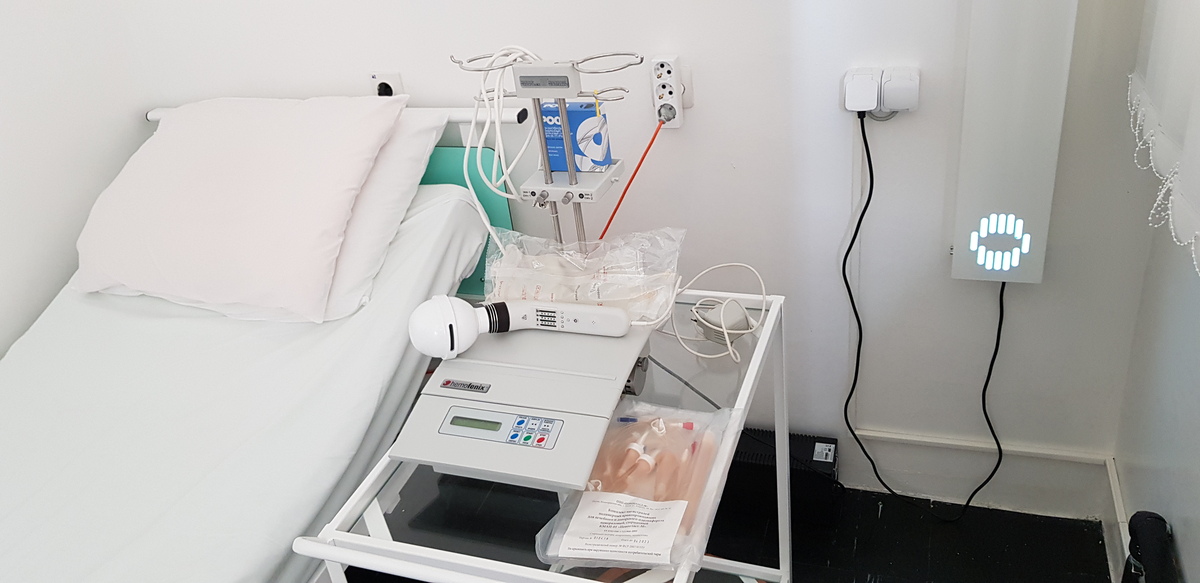
The study involved four cycles of LVPE, performed every other day using the Hemofenix device (Trackpore Technology, Russia). Key aspects of the procedure included:
Single-needle approach: A small catheter was inserted into the peripheral vein in the arm.
Extracorporeal circuit: A minimal volume (65–70 ml) was used to ensure cardiovascular stability and preserve blood volume.
Nanotech membrane: The procedure utilized the PFM 500 filter (ZAO Plasmafilter, Russia), which required ≤ 13 ml of blood.
Extracorporeal circulation: A pump operating on the systole-diastole principle was used for circulation management.
Anticoagulation: Sodium citrate (ACD-A, Fresenius Kabi, Germany) was continuously infused into the extracorporeal circuit.
Plasma removal and replacement: Approximately 30% of the circulating plasma, corresponding to about 1% of body weight, was removed and replaced with saline solution, aiming for a replacement of up to 1.5 times the circulating plasma volume over the course of four cycles.
Clinical assessments
Before starting the LVPE protocol, baseline data were collected, including anthropometric measurements such as body height, weight, body mass index (BMI), waist circumference (WC), and hip circumference (HC). These were measured using the Vaga Seka SE 711 equipment (Germany) to ensure precision and consistency. A qualified endocrinologist performed a comprehensive medical examination to assess the participants’ overall health and to confirm their suitability for the LVPE procedure.
Biochemical measurements
Serum concentrations of selected oligominerals and inflammatory markers were measured both before the first and after the fourth cycle of LVPE. Biochemical analysis was performed using an automated biochemistry analyzer (A15, Biosystems, Spain), which included magnesium, zinc, and iron. Additionally, C-reactive protein (CRP) and high-sensitivity CRP (hsCRP) were measured as indicators of systemic inflammation. Serum concentrations of interleukin-6 (IL-6) and vitamin D3 (Vit D3) were also measured. IL-6 was analyzed using the Cobas e 801 analyzer (Roche Diagnostics, Switzerland), while vitamin D3 levels were determined using the Alinity system (Abbott, USA).
Biomarkers of metabolic endotoxemia and intestinal permeability
LBP, a biomarker of metabolic endotoxemia, was measured in serum samples using the Human LBP ELISA kit (Abcam, UK). The assay had a sensitivity of 6.79 pg/ml and a detection range of 12.5–800 pg/ml.
Serum concentrations of zonulin, a marker for intestinal permeability, were measured using the Human Zonulin ELISA kit (Immundiagnostik AG, Germany), with a sensitivity limit of 34 ng/ml and a detection range of 3.03–40.25 ng/ml. LBP and zonulin levels were measured in serum before the first (I) and after the fourth (IV) LVPE cycle.
ELISA assays were conducted using a Rayto 2100-C ELISA reader (Rayto, China). All biochemical assays followed the manufacturers’ protocols to ensure reliable and reproducible results.
Statistical analysis
Statistical analyses were performed using IBM SPSS Statistics version 26. The normality of all continuous variables was assessed using the Shapiro-Wilk test, supported by inspection of Q–Q plots and skewness–kurtosis values. All variables demonstrated approximately normal distribution, which justified the use of parametric methods. Accordingly, paired Student’s t-tests were applied for pre- vs. post-treatment comparisons, and repeated-measures ANOVA/GLM was used for analyses across treatment cycles. Pearson correlation was used to evaluate linear associations between variables. Descriptive statistics are reported as mean ± SD. Statistical significance was set at p < 0.05.
Results
Participants and anthropometric characteristics
The study included 48 participants diagnosed with MetSy, consisting of men (68.7%) and women (31.3%), with an average age of 50 years. Continuous variables were approximately normally distributed, and parametric tests were applied for all analyses. Anthropometric characteristics were analyzed to compare physical attributes between male and female participants (Table I).
Table I
Comparison of anthropometric characteristics of male and female participants with MetSy (mean ± SD)
Although age did not differ significantly between men and women, men had significantly higher height, weight, BMI, and waist circumference, indicating gender-related differences in anthropometric parameters.
Impact of LVPE on biomarkers and selected oligominerals
The effects of four cycles of LVPE on biomarker levels related to metabolic endotoxemia, intestinal permeability, and inflammation are summarized in Table II.
Table II
Biomarker changes before and after four cycles of LVPE (mean ± SD)
LVPE demonstrated anti-inflammatory effects through a significant reduction in CRP levels, indicating a decrease in systemic inflammation. Additionally, hsCRP showed a downward trend, suggesting a potential effect on low-grade inflammation, though the change was not statistically significant. Furthermore, levels of Vit D3 significantly decreased, indicating possible changes in vitamin D metabolism during treatment. No significant changes were observed in LBP, zonulin, or IL-6, suggesting no substantial impact on endotoxemia, gut permeability, or immune activation.
Table III summarizes the impact of LVPE treatment on the levels of selected oligominerals.
Table III
Oligomineral changes before and after four cycles of LVPE (mean ± SD)
| Variables | Before I cycle | After IV cycle | P-values |
|---|---|---|---|
| Mg [mmol/l] | 0.7567 ±0.14307 | 0.7798 ±0.15360 | 0.442 |
| Fe [µmol/l] | 16.7833 ±8.20167 | 17.3685 ±5.92715 | 0.630 |
| Zn [µmol/l] | 14.3865 ±4.67309 | 15.7813 ±5.48331 | 0.009 |
LVPE treatment led to an increase in serum levels of selected oligominerals, with a statistically significant rise in zinc (Zn) levels (t = –2.726; p < 0.009), indicating a notable effect on zinc metabolism. In contrast, magnesium (Mg) and iron (Fe) levels remained unchanged, suggesting LVPE had no substantial impact on their serum concentrations within the study duration.
General Linear Model analysis
The General Linear Model analysis revealed significant changes in biomarkers and oligominerals in response to LVPE treatment:
LBP (F = 59.803; p < 0.001): Endotoxin exposure fluctuated during LVPE treatment, indicating potential changes in metabolic endotoxemia.
Zonulin (Zon) (F = 14.404; p < 0.001): Gut permeability changed dynamically, reflecting alterations in intestinal function during LVPE.
CRP (F = 3.212; p < 0.039): LVPE contributed to a reduction in systemic inflammation, as indicated by CRP, a marker of acute inflammation.
hsCRP (F = 18.032; p < 0.001): LVPE modulated low-grade inflammatory responses, reflecting a subtler immune response.
IL-6 (F = 4.881; p < 0.021): Immune activation fluctuated during LVPE, although it played a less prominent role compared to other biomarkers.
Vit D3 (F = 62.137; p < 0.001): LVPE influenced vitamin D3 utilization or storage, potentially through immune modulation or other physiological changes.
Magnesium (F = 15.205; p < 0.001): LVPE significantly impacted magnesium levels, suggesting an influence on its balance and metabolism.
Iron (F = 32.005; p < 0.0001): LVPE significantly modulated iron levels, indicating a role in iron metabolism or bioavailability.
Zinc (F = 67.263; p < 0.0001): A highly significant effect on zinc levels was observed, suggesting that LVPE has a pronounced effect on zinc metabolism and its physiological functions.
Correlations between anthropometric measurements, biomarkers, and oligomineral levels before and after the fourth cycle of LVPE
Before LVPE treatment: LBP positively correlated with age (r = 0.290, p < 0.046), zonulin (r = 0.313, p < 0.031), and zinc (r = 0.408, p < 0.004), while it negatively correlated with magnesium (r = –0.347, p < 0.016) and iron (r = –0.305, p < 0.035). Hip circumference correlated with hsCRP (r = 0.335, p < 0.020). Additionally, hsCRP negatively correlated with iron (r = –0.317, p < 0.028) and zinc (r = –0.297, p < 0.040). Vitamin D3 positively correlated with magnesium (r = 0.352, p < 0.014).
After four cycles of LVPE: LBP correlated with age (r = 0.387, p < 0.007), CRP (r = 0.322, p < 0.027), zonulin (r = 0.540, p < 0.001), and zinc (r = 0.548, p < 0.001). hsCRP positively correlated with CRP (r = 0.349, p < 0.015) and IL-6 (r = 0.308, p < 0.035). Vitamin D3 inversely correlated with BMI (r = –0.314, p < 0.032).
Discussion
This study aimed to evaluate the effects of LVPE on metabolic endotoxemia, low-grade inflammation, and mineral metabolism in individuals with MetSy.
Obesity, as reflected in our cohort (Table I), is an important contextual factor. Adult obesity affects approximately 16% of the global population, with overweight prevalence around 28%, and continues to rise. Severe obesity (BMI ≥ 35 kg/m²) is associated with increased morbidity and mortality, chronic low-grade inflammation, endotoxemia, and metabolic disturbances [19–21].
In our study, higher BMI and waist circumference correlated with elevated baseline inflammatory markers and LBP levels, suggesting that obese participants may particularly benefit from LVPE in modulating systemic inflammation and metabolic stress.
Our findings revealed a significant reduction in CRP levels following four cycles of LVPE, suggesting a notable reduction in systemic inflammation. This supports previous studies showing that LVPE can modulate inflammatory responses, particularly in conditions such as cardiovascular disease and metabolic dysfunction [22, 23]. A downward trend in hsCRP was also observed, though not statistically significant. This trend suggests that LVPE may have a broader, though subtler, effect on low-grade inflammation, which plays a critical role in MetSy and atherosclerosis.
Interestingly, LBP, a marker of metabolic endotoxemia, did not show significant changes after LVPE. This suggests that although LVPE reduced systemic inflammation, it did not substantially alter endotoxemia. Endotoxemia driven by gut-derived LPS contributes to systemic inflammation and metabolic disturbances [24]. The lack of significant changes in LBP and zonulin indicates that while LVPE has anti-inflammatory effects, its influence on gut permeability and LPS translocation remains uncertain.
The mechanism of LVPE likely involves the selective removal of pro-inflammatory mediators using nanomembranes with pores of 30–50 nm [18]. These membranes can filter out larger pro-inflammatory molecules (cytokines, complement proteins, LPS), which are linked to metabolic inflammation. By removing these mediators, LVPE may reduce the inflammatory burden, explaining the observed decrease in CRP. However, this filtering capacity may not directly affect gut-derived endotoxemia, as reflected by unchanged LBP and zonulin levels.
Additionally, the lack of significant changes in IL-6 levels post-LVPE is notable. IL-6 is a central cytokine in immune activation and inflammation [25], and its stability suggests that LVPE’s anti-inflammatory effects may operate through IL-6–independent pathways or downstream inflammatory mediators.
In this context, it is relevant to consider recent evidence identifying butyrylcholinesterase (BChE) as a promising biomarker of low-grade systemic inflammation, nutritional status, and hepatic function. Lower BChE activity has been associated with increased inflammatory burden and metabolic stress, positioning it as an emerging diagnostic tool in metabolic disorders, including MetSy [26]. Although BChE was not evaluated in our study, the observed reduction in CRP suggests that LVPE may also modulate cholinergic and hepatometabolic inflammatory pathways reflected by BChE dynamics. Incorporating BChE into future LVPE studies could provide a more comprehensive understanding of how LVPE influences both established and novel inflammatory markers in metabolic disease.
A key secondary outcome of this study was the impact of LVPE on serum oligominerals, specifically Zn, Mg, and Fe. We observed a significant increase in Zn levels following LVPE, which has important implications for immune function, as Zn plays a pivotal role in immune modulation and inflammation regulation [27, 28]. This finding suggests that LVPE may enhance immune competence and support anti-inflammatory processes. The increase in Zn also aligns with the hypothesis that LVPE may selectively influence mineral metabolism, particularly elements involved in immune regulation, while leaving others, such as Mg and Fe, unchanged. The stability of Mg and Fe levels may indicate that LVPE does not significantly affect these minerals within the short duration of the study. The lack of changes suggests that LVPE’s impact on mineral metabolism is specific rather than global.
Before LVPE, LBP was positively correlated with age, zonulin, and Zn, and negatively with Mg and Fe. These correlations reflect complex interactions between endotoxemia, aging, and mineral homeostasis. The positive correlation between LBP and age supports evidence that endotoxemia and gut permeability worsen with aging, contributing to inflammation and metabolic dysfunction [29, 30]. The negative correlations with Mg and Fe underscore the role of mineral disturbances in immune impairment and oxidative stress [31, 32]. Post-LVPE, LBP continued to correlate positively with Zn and CRP, suggesting that Zn elevation may be intertwined with LVPE’s immunomodulatory effects. The correlation between LBP and zonulin implies that although LVPE may not directly modify endotoxemia markers, it might influence gut permeability indirectly, possibly via changes in immune regulation or vitamin D metabolism, as Vit D3 levels decreased during treatment.
This study has limitations, including a small sample size, which restricts generalizability. Additionally, only short-term effects of LVPE were assessed. While anti-inflammatory effects were evident, long-term impacts on endotoxemia, gut permeability, and mineral metabolism remain unclear. Future studies should explore sustained LVPE effects and evaluate whether repeated treatment provides cumulative benefits or potential risks.
In conclusion, this study provides evidence that LVPE significantly reduces low-grade inflammation, as shown by reductions in CRP and hsCRP, suggesting its potential role in managing inflammation in MetSy. However, its effects on endotoxemia markers like LBP and zonulin, as well as its influence on gut permeability, remain inconclusive. The increase in Zn levels highlights a potential mechanism through which LVPE may modulate immune and inflammatory pathways, supporting its role in immune regulation. Further research is needed to fully understand the long-term effects of LVPE on endotoxemia, gut permeability, mineral metabolism, and overall metabolic health.